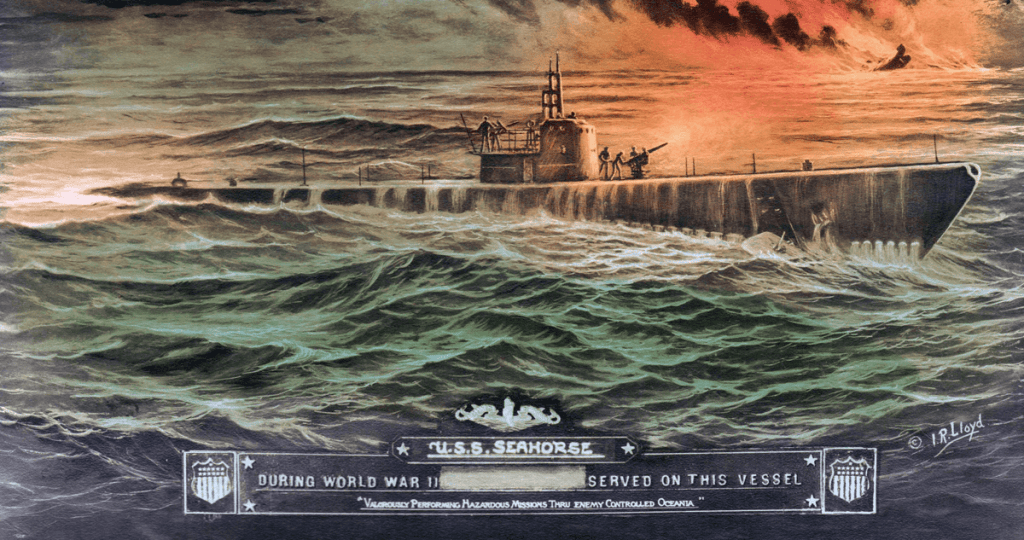
At 0027 on November 27, 1943, two dull thuds reached the bridge of USS Seahorse (SS-304). Few men below decks heard them. About ten seconds later, small flames appeared across the Japanese tanker astern. The patrol report says they lasted perhaps a second before the ship disappeared in a column of fire. The men on the bridge watched it turn from dull orange to blue-white. They estimated that it rose at least 3,000 feet. For several seconds, the sea around them was bright as day.
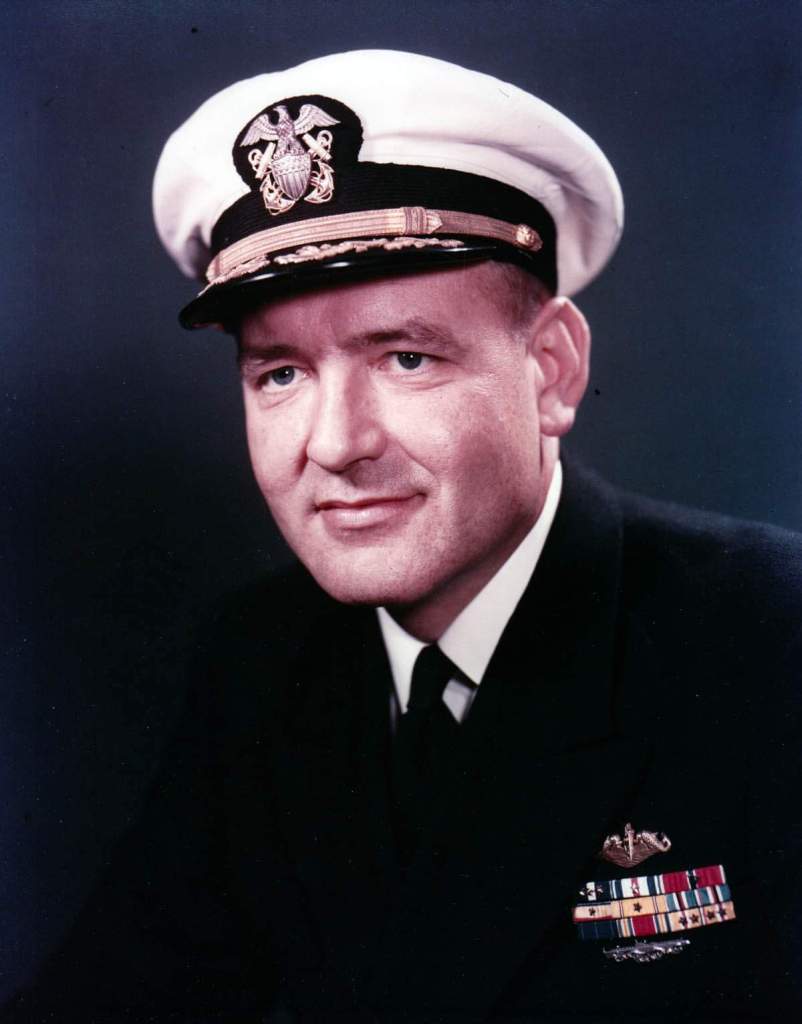
The chase had begun with smoke the previous morning. Seahorse, on her second war patrol and her first under Lieutenant Commander Slade D. Cutter, was submerged in the East China Sea. By early afternoon her crew could see smoke from three sources, hear echo-ranging, and make out a twin-engine bomber patrolling overhead. The ships themselves were still beyond sight. Cutter kept the boat submerged on a parallel course. At 1720, Seahorse surfaced and gave chase.
As the light went, radar gave the crew a clearer picture. Two large tankers and a cargo ship were steaming under escort toward Iki Suidō, a passage at the southern end of the Tsushima Strait between Iki Island and Kyushu. At the convoy’s speed, Seahorse’s plot put it in the passage around 0230. Suspected minefields lay ahead. As the evening wore on, the tankers were getting closer to waters where Cutter had good reason to break off the pursuit.
There was no moon, but the night was clear and Seahorse’s wake glowed with phosphorescence. One escort passed only 2,100 yards off the submarine’s port beam without spotting her. At 2302, Cutter fired his last three bow torpedoes at the lead tanker. Two minutes later, the bridge reported two hits and saw what appeared to be the bow and stern going down separately. An escort chased Seahorse east while another dropped depth charges near the scene of the attack. When the pursuing escort appeared to lose contact, Cutter turned back toward the convoy.
At 0025, Seahorse fired four stern torpedoes and went to full speed. Then came the thuds and the explosion. The crew reported that fragments fell roughly halfway between the tanker and the submarine. An escort near the blast stopped, and Seahorse tracked it on radar until contact faded. The patrol report speculated that flying debris might have disabled it. At 0030, shore searchlights began sweeping the water near Uku Shima. With the approaches to the strait close by, Seahorse opened the range at maximum speed. She dived at 0512 and remained submerged until late afternoon. By then, a fuel shortage dictated the next move. Cutter set a course out of the patrol area.
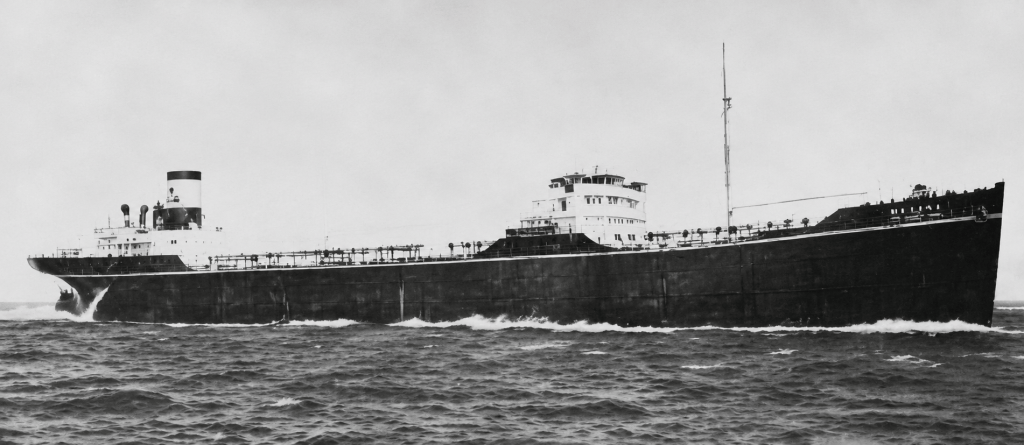
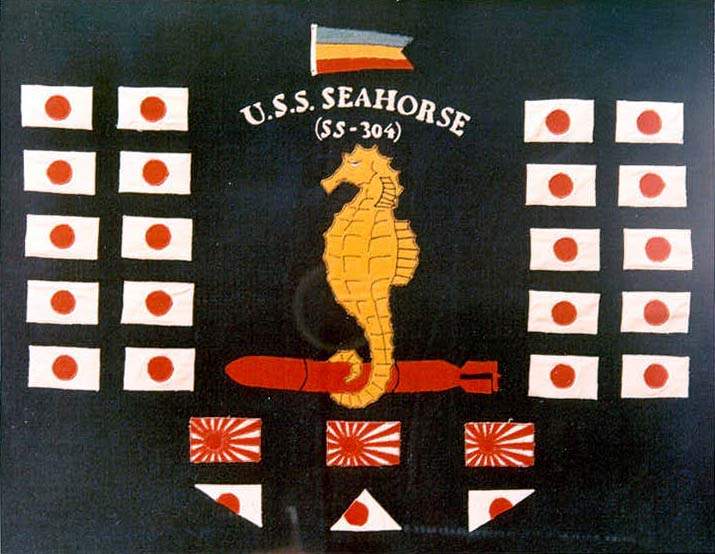
The postwar record credits Seahorse with one confirmed loss from the encounter, the 7,309-gross-register-ton tanker San Ramon Maru. Cutter’s report describes two tankers going down. Japanese records indicate that San Ramon Maru survived the first attack, was hit again, and sank later that morning. They also record that patrol boat No. 36 picked up 25 survivors. From Seahorse’s bridge, the explosion had seemed too violent for anyone to survive. The rescue is the part of the night her crew never saw.
Sources
USS Seahorse, Report of Second War Patrol, Enclosure (A), pp. 12–14.
Joint Army–Navy Assessment Committee, Japanese Naval and Merchant Shipping Losses During World War II by All Causes, Chapter 6, USS Seahorse entry.
CombinedFleet.com, Japanese Oilers, San Ramon Maru tabular record of movement, November 27, 1943.


Leave a Reply