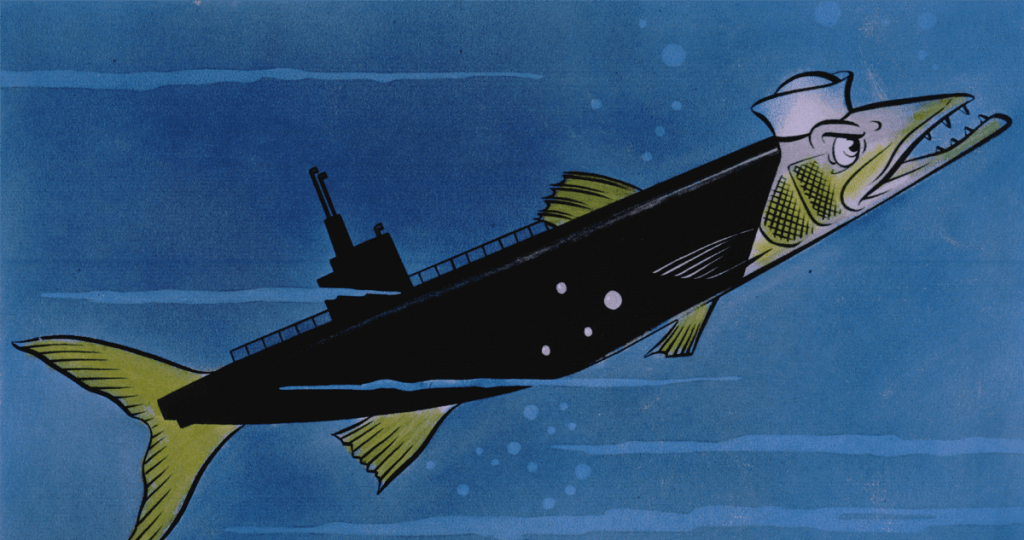
USS Picuda off Korea, November 23, 1944
At 0905 on November 23, 1944, USS Picuda heard a Japanese escort stop near the ship she had torpedoed off the Korean coast. The target’s propellers had gone silent, but the sounds of the ship breaking up were still coming through the submarine’s sound gear. The patrol report guessed that the escort had stopped to pick up survivors. Then came a sentence about the predicament aboard Picuda: “Wish we had a trim.”
That short entry tells much of the story of Picuda’s Thanksgiving Day. In the dark, the submarine had slipped among a convoy’s escorts and made her first night surface attack. After daylight, she caught up with the convoy and struck again. Two solid hits in the morning gave her a chance at another ship, but water in the forward torpedo room bilges had made it impossible to hold periscope depth. By 0905, the crew could listen to what was happening above them while they worked to regain control of the boat.
The first sign of the convoy came at 0015, when Picuda’s sound gear picked up the ping of active sonar. Three minutes later, her surface-search radar made contact at 18,000 yards. The islands complicated the picture. Radar echoes from land made it difficult to distinguish ships, and at 0130 Picuda had to dodge a trawler that crossed her track. By 0310, after nearly three hours of tracking, the submarine had worked ahead of the convoy on its starboard side. The ships were making about eight and a half knots along the general line of the coast.
Lt. Cmdr. Evan T. Shepard took Picuda in on the surface. He kept the speed down to limit the phosphorescent wake that might give her away. As the range closed, four merchant ships came into view in a loose column. The men aboard Picuda judged them to be two large tankers between two medium cargo ships. One escort had dropped astern, leaving Shepard to pass between it and the escort ahead. Then the officer of the deck saw two more escorts coming up from behind the convoy. The bridge watch picked them up before the radar display did. In the patrol report’s judgment, Picuda had arrived just as the escorts were changing formation after clearing the restricted waters along the coast.
The nearest escort closed to 1,100 yards. Another, about 1,500 yards away to port, turned toward the submarine. Both were plainly visible without binoculars. Shepard could only guess whether the Japanese had seen him, and he had a firing solution on the two rear merchant ships. At 0343, Picuda fired from her bow tubes. One torpedo broke the surface about 500 yards ahead before resuming its run. Another broke water almost as soon as it left the tube. Shepard brought the boat around, and at 0347 the stern tubes began firing. The bridge heard two explosions, the sound crew counted three, and the stern lookout saw puffs of smoke at the targets.
As Picuda accelerated away, Shepard found the escort that had been on his port side now closing on his starboard quarter. He turned east, with an escort on either side. The report called the escape “the classic maneuver” and drew its conclusions in the dry language of a crew that had just discovered how close it could get in the dark. Camouflage worked, the report decided. The Japanese apparently neglected their binoculars. And Picuda could do better next time. By 0455, with depth charges still a recent sound astern, the crew had reloaded both sets of torpedo tubes and secured from battle stations.
At 0554, Picuda submerged ahead of the convoy. She spent part of the morning surrounded by four trawlers and a sampan, then sighted masts at 0750. This time, two of the merchant ships from the earlier encounter came into view with a single escort. Shepard’s plan was to fire the remaining bow torpedoes at the leading ship, which the crew took for a tanker, and use the stern tubes against the cargo ship following off its port quarter. The escort passed close across Picuda’s bow. Shepard let it clear, raised the periscope again, and at 0840 fired four torpedoes. Two hit.
When Shepard was ready to look for the second ship, the depth gauge showed Picuda passing 80 feet. The diving officer was fighting to bring her back up. The patrol report attributed the flooded forward bilges to overuse of the poppet valves and leakage through the hydrogen-burner cable openings. The water had upset the boat’s trim, and Shepard decided to save his last four torpedoes rather than fire by sound alone. Picuda went to 300 feet and rigged for depth charge. At 0845 the crew began hearing the target break up, a sound that continued for about an hour.
The escort dropped charges intermittently, then released sixteen in a single salvo at 0942. The report judged them to be clear of the boat. By 1020, the diving crew had worked Picuda back to periscope depth. No ships were in sight. A Japanese reconnaissance floatplane appeared a minute later, flying low and circling the attack position. Two aircraft searched the area over the next three hours. Picuda remained submerged until 1814, when she surfaced and headed back toward her assigned patrol area.
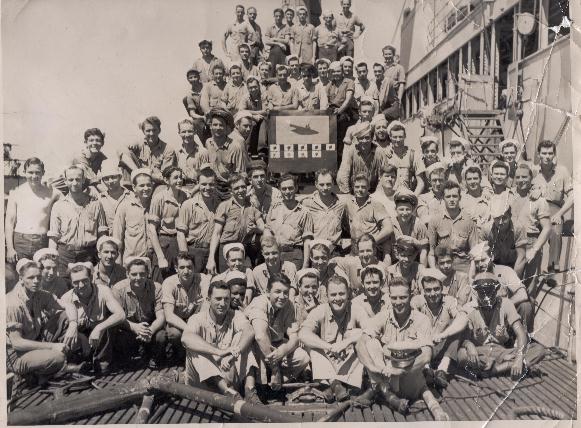
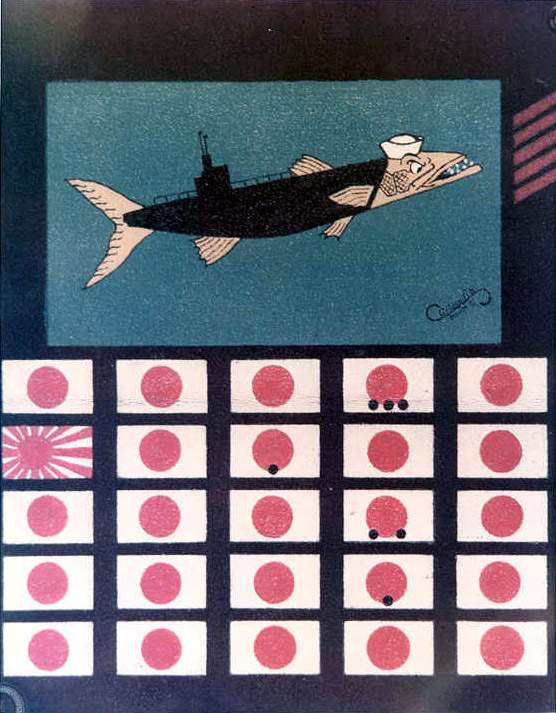
The Navy credits Picuda with sinking the 6,933-ton cargo ship Shuyo Maru and the 5,296-ton passenger-cargo ship Fukuju Maru. Later accounts place the loss of Shuyo Maru in the predawn attack and that of Fukuju Maru in the morning. Those names give the day a certainty that Shepard and his crew could only piece together from radar echoes, brief looks through the periscope, and sounds heard through the hull. The patrol report preserves the moment when the second attack stopped being about the next target and became a struggle to get the submarine back under control. For the men aboard Picuda, that was the work still in front of them when they heard the escort stop.
Sources
USS Picuda (SS-382), Fourth War Patrol Report, November 23, 1944 entries.
Naval History and Heritage Command, “Picuda (SS-382),” Dictionary of American Naval Fighting Ships.
Bob Hackett, “Fukuju Maru,” CombinedFleet.com, November 23, 1944 entries.


Leave a Reply