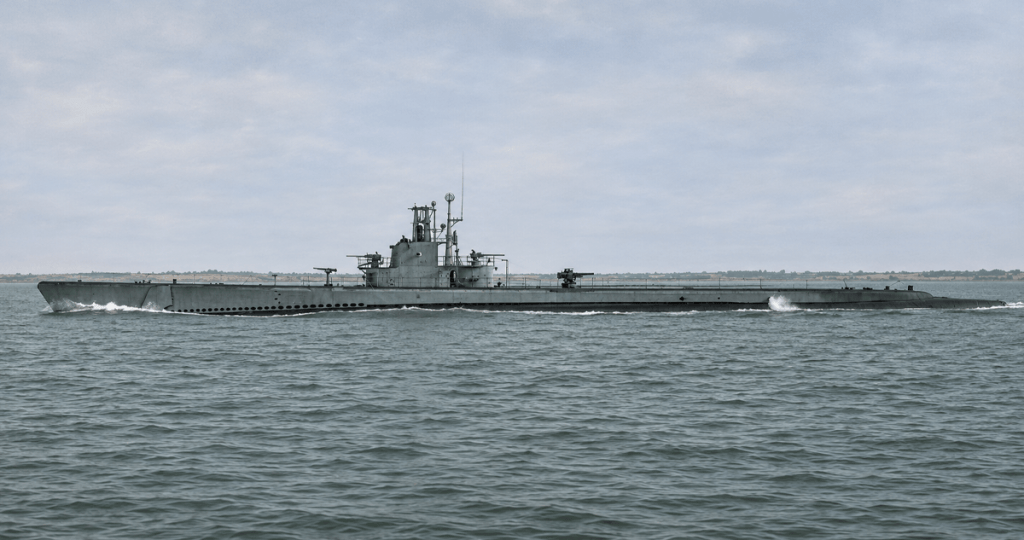
USS Mingo off Borneo, November 24–26, 1944
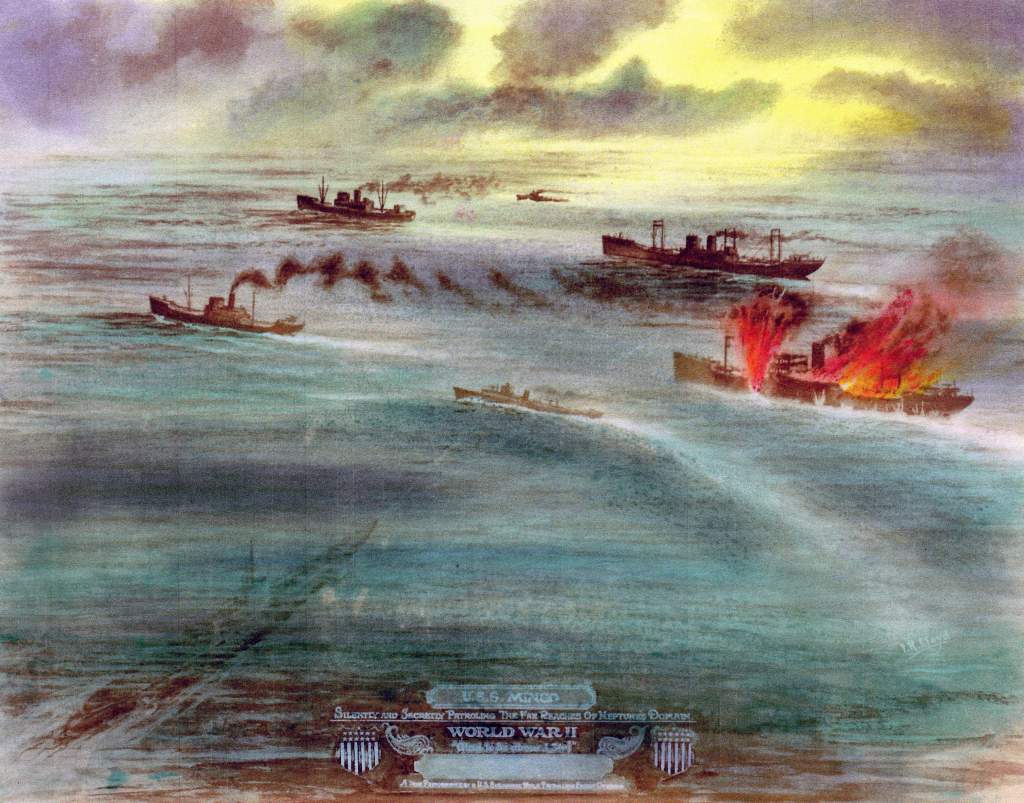
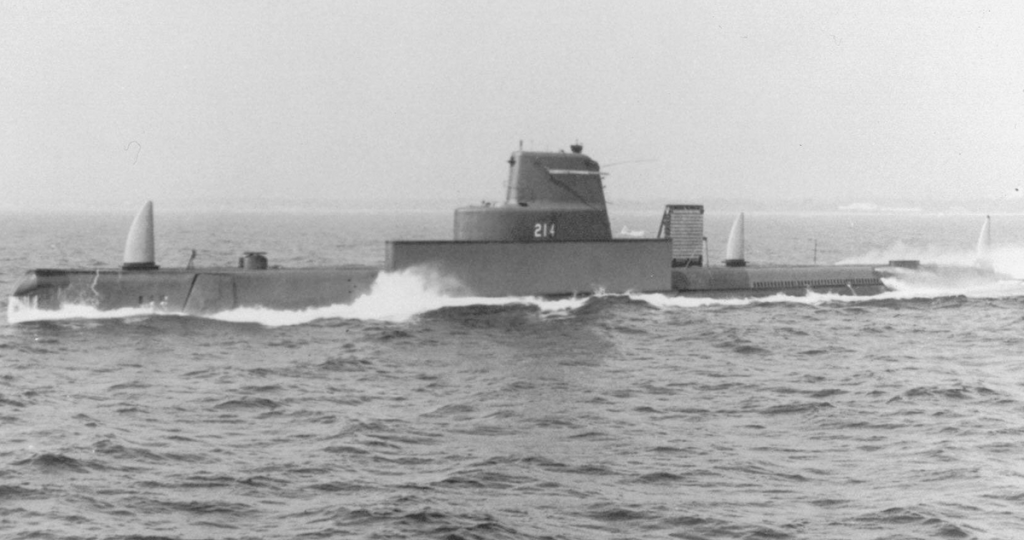
By noon on November 25, 1944, the sea off Borneo was littered with oil drums. USS Mingo’s crew estimated there were between a thousand and fifteen hundred of them, some still smoldering. About ten lifeboats lay capsized among the debris. A landing craft, perhaps thirty-six feet long, was still intact. The submariners saw no survivors. They photographed the wreckage and moved on. Eight hours earlier, the fire that left those drums scattered across the South China Sea had lit up the convoy and exposed an escort crossing Mingo’s stern.
On her fifth war patrol, Mingo had rescued sixteen downed American airmen in the waters around Borneo and Celebes. Her sixth patrol brought her back to Borneo, this time chiefly for reconnaissance. On November 24, she made a dawn trim dive, then spent the day on the surface watching the shipping route from Miri, on Borneo’s northwest coast, to Manila. At 1930 she turned south, intending to patrol submerged off Miri the next day. The convoy found its way into her patrol report well before dawn.
At 0201 on November 25, Mingo’s sound operators picked up echo ranging to the west. Radar found the contact two minutes later at 20,000 yards, and the submarine went to battle stations. The ships were making eight knots on a generally northwesterly course. Mingo tracked them for more than an hour before going to flank speed to get ahead. By 0420 the men on the bridge could make out six ships. The largest sounded heavy on the hydrophones and had twin screws. The watch took her for a tanker.
(NAVSOURCE)
The escort formation was harder to read. One ship led the convoy, several others were on the large ship’s port side, and another roved astern. One of the smaller vessels might have been a coastal freighter. The starboard side was so open that the patrol report records the crew’s puzzlement at finding it that way. Radar showed no hidden escort on that flank, and at 0435 Mingo began firing her bow tubes.
The bridge watch saw three hits. The third was followed by fire along the ship’s entire length, bright enough to illuminate the scene as Mingo submerged. At 0440 a larger explosion left nothing visible of the target through the periscope except fire. The ship was Manila Maru, a 9,486-ton passenger-cargo vessel that had left Miri the previous evening with a Manila-bound convoy. She carried gasoline and ammunition. The men aboard Mingo had called her a tanker in the darkness. By midday the drums floating at the site would give them some measure of what she had been carrying.
As the leading escort headed toward the submarine, Mingo started down. Then the escort swung across her stern, its outline visible against the burning oil, and Mingo held at periscope depth long enough to fire from her stern tubes. The crew heard what they believed was a hit. Through the periscope the escort appeared dead in the water, with steam rising near its mainmast. Two other escorts were coming in from the starboard quarter, and Mingo went deep. The first depth charge, at 0448, was recorded as very close. More followed in groups. By 0520 the submarine was running at 370 feet, and the last two escorts were still audible astern. Sound lost them at 0830.
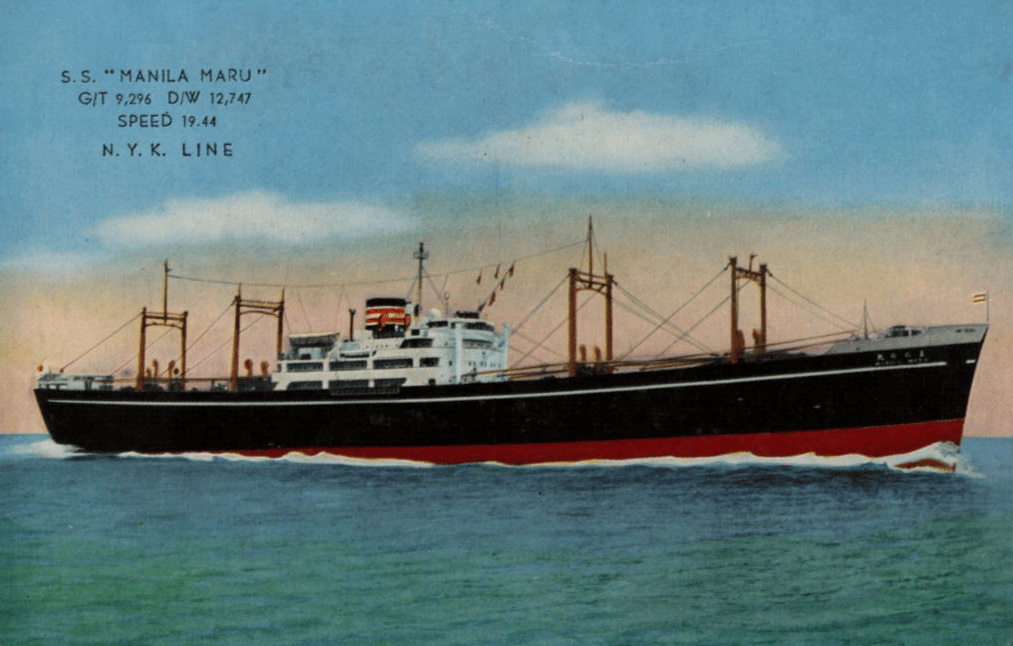
The patrol report’s judgment was that the escort Mingo hit had probably gone down. The later ship history describes it as damaged, and the postwar Joint Army–Navy Assessment Committee credits Mingo with one sinking that day, Manila Maru. From the submarine, the crew had seen the escort shudder and stop, then had been driven deep. By the time Mingo returned to periscope depth at 1035, all she could see in that direction were two columns of smoke.
Mingo surfaced at 1115 and spent part of the afternoon passing through the debris. At 1330 she cleared the area at full speed, then slowed as she worked westward. The following morning she made another dawn trim dive and continued toward the Natoena Islands. By evening her course was set for the eastern approaches to Great Natoena Passage. The entry for November 26 was back to the ordinary business of a patrol. The previous day’s entry held what the crew had been able to see of the ship they sank, from the first radar contact to the last of the smoldering drums.
Sources
USS Mingo (SS-261), Report of Sixth War Patrol, pp. 6–8. https://catalog.archives.gov/id/74826778
USS Mingo (SS-261), ship history supplied with the draft.
Joint Army–Navy Assessment Committee, Japanese Naval and Merchant Shipping Losses, Chapter 6. https://www.ibiblio.org/hyperwar/Japan/IJN/JANAC-Losses/JANAC-Losses-6.html
CombinedFleet.com, Manila Maru movement record. https://www.combinedfleet.com/Manila_t.htm


Leave a Reply