USS Guardfish and her eighth war patrol
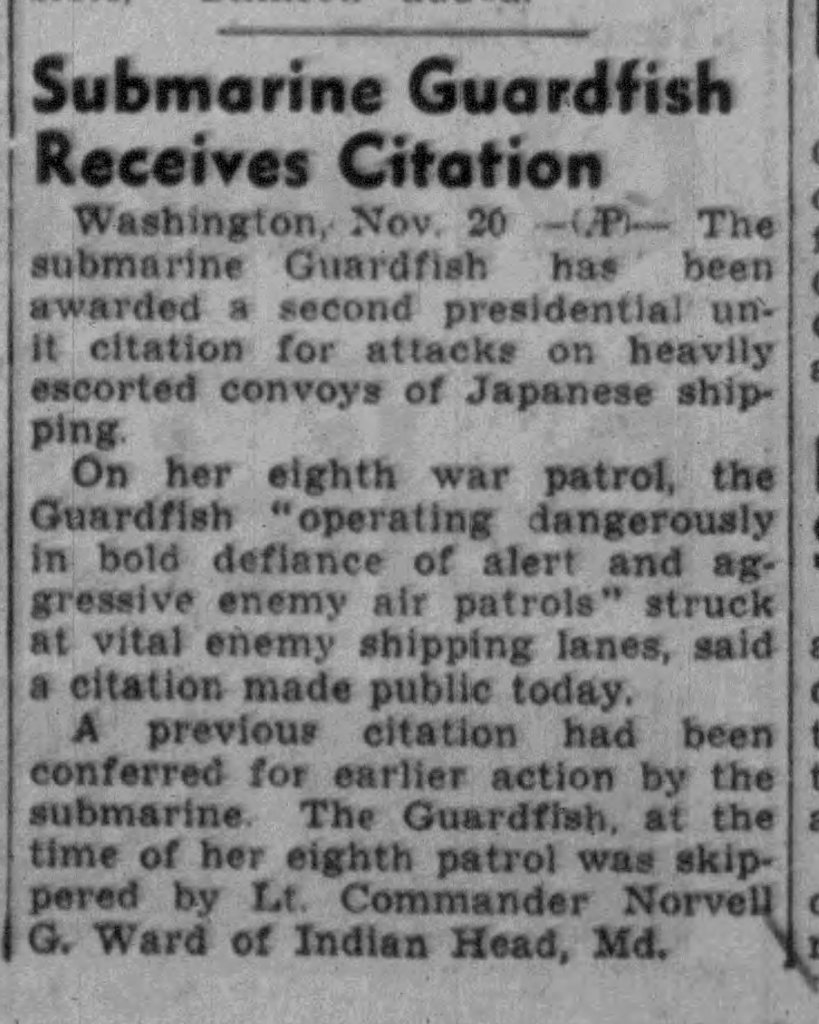
On November 20, 1944, the Stevens Point Journal (WI) carried a short Associated Press dispatch announcing that USS Guardfish had received her second Presidential Unit Citation. The Navy praised the submarine for striking heavily escorted Japanese convoys “in bold defiance of alert and aggressive enemy air patrols.” The dispatch named her skipper, Lieutenant Commander Norvell G. Ward of Indian Head, Maryland, and gave readers little sense of what those aircraft had done to the plans of the four submarines sent out together. Over the course of the patrol, aircraft repeatedly broke contact with convoys and kept submarines down when they most needed to pass along a bearing or a change of course.
Four Boats for the Strait
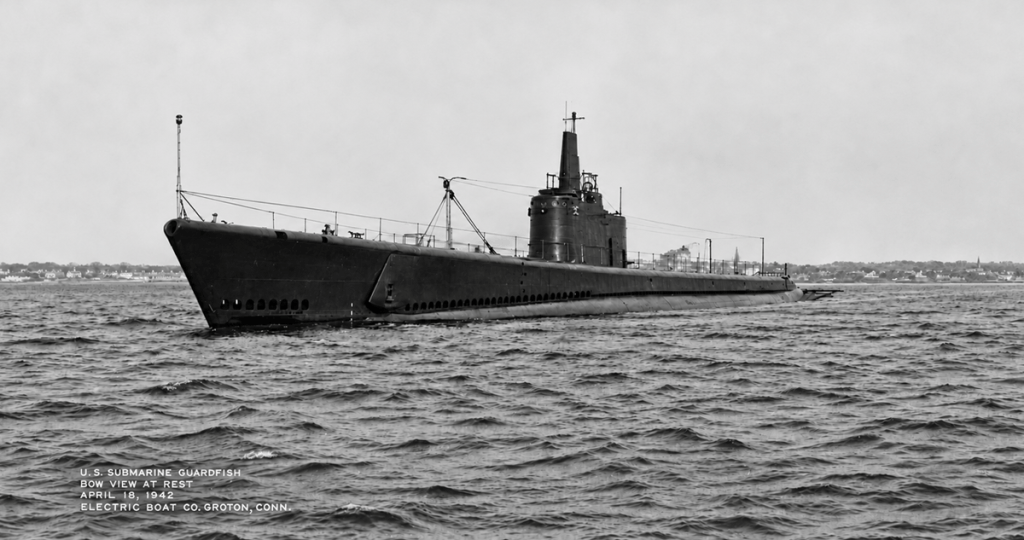
Guardfish, a Gato-class fleet submarine commissioned in May 1942, had earned her first Presidential Unit Citation for her opening two patrols. She came back to Pearl Harbor on June 1, 1944, after an overhaul in San Francisco. Ward was preparing for her eighth war patrol when Captain W. V. O’Regan, commander of Submarine Division 42, embarked to lead Task Group 17.16. Ward commanded the boat. O’Regan directed the four submarines of the Seventh Coordinated Attack Group, known as the Mickey Finns.
Guardfish, Thresher, and Piranha sailed from Pearl Harbor on June 14. They practiced group maneuvers and communications on the passage to Midway, where they took on fuel and fresh water on June 18. Apogon, which had been refitting at Majuro, joined at sea on June 23. Her patrol instructions and codes came across on a line in an empty four-inch shell container. A daylight search for a downed American aviator northwest of the Marianas interrupted the passage on June 27. The group sighted floating drums, and Apogon reported three rafts with survivors. The boats completed the assigned search and continued west.
The Luzon Strait lies between northern Luzon and Formosa, now Taiwan, and connects the Philippine Sea with the South China Sea. The group could spread across the approaches to cover more water than any boat could alone. Once one submarine found a convoy, she could report its movement while the others worked into position. The plan depended on a contact report reaching boats that might be fifteen or twenty miles apart and might have to dive without warning.
A Convoy Gets Away
At 2241 on July 11, Thresher reported nine large ships in three columns with about five escorts. All four boats received the message. Thresher trailed and reported the convoy’s movements while Apogon worked up its starboard flank and Guardfish took the port flank. Piranha closed from farther north. O’Regan considered the coordination excellent.
Bright moonlight obliged Apogon to approach submerged. Shortly after 0300 she fired six torpedoes and heard three explosions. A destroyer passed about 400 yards ahead. When the periscope came back around, a large cargo ship was already bearing down on her at less than that distance. Apogon went deep, but the freighter struck her and badly damaged the structure supporting her periscopes. O’Regan sent her back to Midway.
Guardfish had reached a position ahead and submerged for her own approach. A sharp convoy turn left her out of effective range. Escorts drove Thresher off twice, and aircraft appeared over the convoy after dawn. Guardfish sighted the ships for the last time at 0813. O’Regan later concluded they had probably escaped through the Babuyan Channel. The four boats had closed on the same convoy as planned, yet by morning one was damaged, the others had lost contact, and the ships were on their way.
Two Convoys Forty Miles Apart
On July 16, a change of course failed to reach Piranha, leaving her about 110 miles east of the other boats when she reported a convoy before dawn. That morning she attacked a tanker and a transport. She saw hits on the tanker and its stern settling before an aircraft forced her deep. Two heavy explosions shook the boat. The crew could only speculate whether the tanker had blown up or an aircraft had dropped depth charges. The group credited Piranha with the tanker.
At 0950 Guardfish sighted smoke from a ten-ship convoy and began working ahead despite its air cover. That afternoon Thresher found a smaller convoy, then lost it when a plane forced her down. Reports reached Piranha hours after the initial contacts, and O’Regan reckoned that currents and the difficulty of obtaining fixes could put reported positions as much as twenty miles off. By midnight Thresher had regained contact with her own convoy. She and Guardfish went into action against separate formations about forty miles apart.
At 2342 Ward fired six bow torpedoes at the overlapping ships at the head of the larger convoy. The leading tanker exploded. A large freighter caught fire aft and later blew up, another broke in two, and a fourth went down bow first. With much of the convoy scattering, Guardfish tracked a ship whose escort was dropping depth charges on its far side. At 0042 she fired three stern torpedoes and reported two hits. The ship took a heavy list and disappeared. A third attack ended shortly after 0300, when Guardfish hit another freighter that had been zigzagging every few minutes. The report credited Ward’s crew with six ships and an estimated 42,300 tons in the night’s action. The control party had been at battle stations for six hours, and Ward had gone fifty hours without rest. With the moon rising and an escort still near, he cleared the area.
Thresher made three attacks on her convoy of four merchant vessels and two destroyers. When the tanker exploded, Piranha was closing from about 15,000 yards, and the blast was visible from Guardfish. The last destroyer’s radar return disappeared after a series of explosions. O’Regan credited Thresher with the entire formation. She had fired all her torpedoes, and he ordered her home. In discussing awards, he urged the Navy to consider the value of the boat that found and reported a convoy as well as the boat that fired the torpedoes. Piranha’s contribution that night had largely come over the radio.
The Return to Midway
On July 18, Guardfish attacked a naval auxiliary in a fast convoy. Ward saw one hit and heard another. A tanker turned toward his periscope at 800 yards, forcing the submarine deep. When he last saw the auxiliary, it was listing heavily with the main deck awash. The group’s wartime report counted it as sunk, while the later ship history describes the July 18 result as damage.
The next morning rain squalls and an escort spoiled Ward’s approach to his original target. He shifted to two overlapping freighters and fired four torpedoes. The nearer ship broke in half, and the crew heard a timed hit on the farther ship. They also heard a torpedo pass overhead near the maneuvering room, probably one of their own running erratically. Guardfish went deep and endured a severe depth charging. The later ship history identifies the loss as Teiryu Maru and also credits Guardfish with sinking Mantai Maru, Hizan Maru, and Jinsan Maru during the July 16–17 action. Those identifications help put names to the ships in the wartime account, whose estimates were made from brief periscope sightings, sound, and radar.
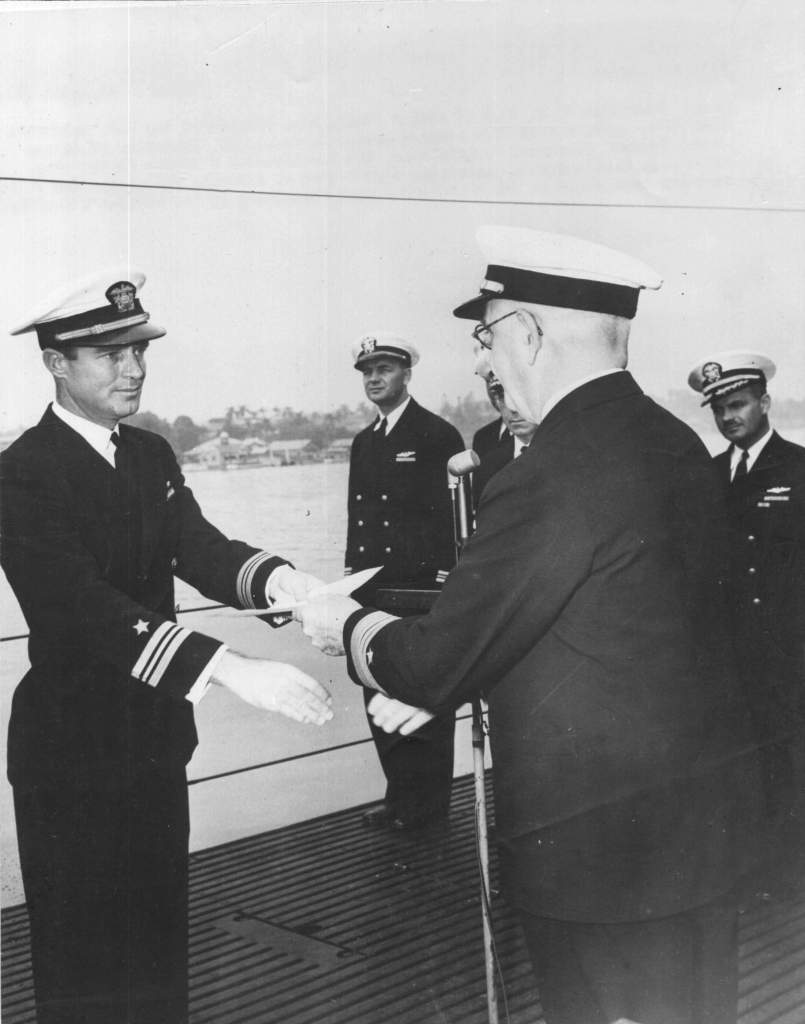
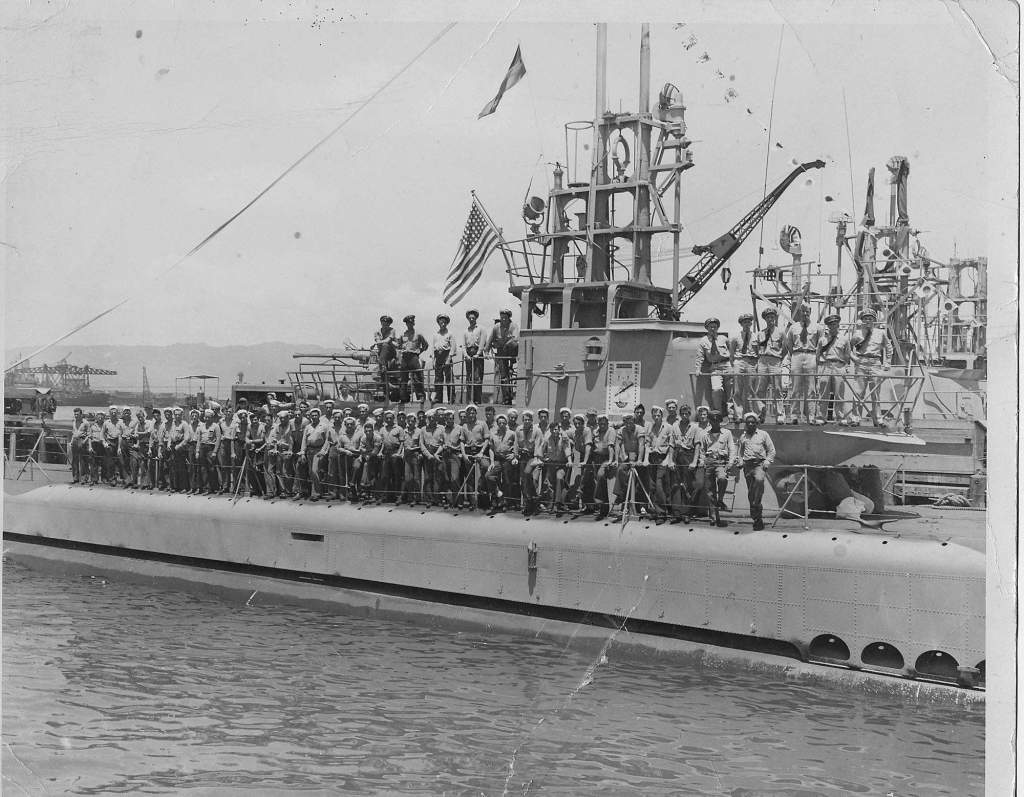
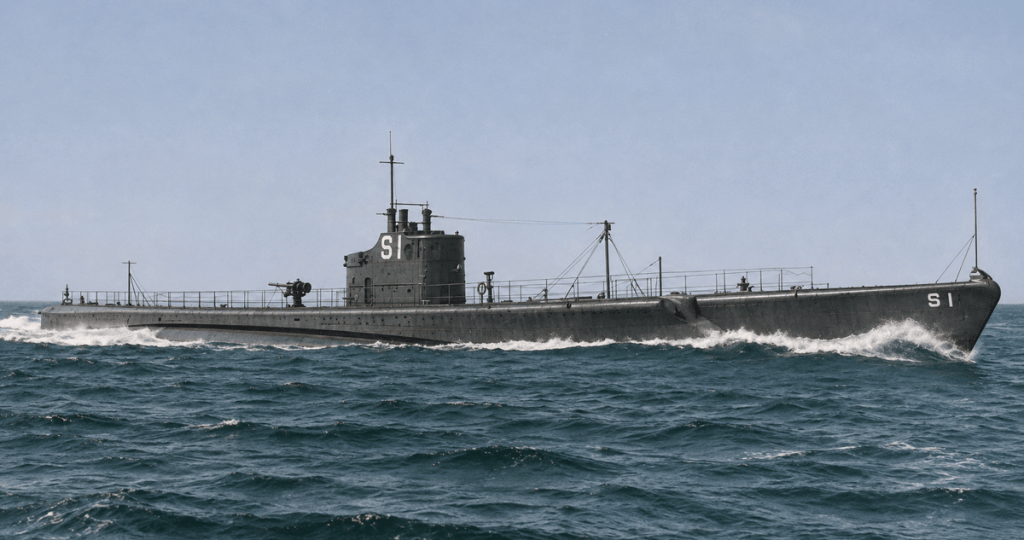
US National Archives photo # 80-G-44885 from National Archives and Records Administration (NARA), College Park, Maryland, courtesy of Sean Hert. (NAVSOURCE)
Guardfish left the area on July 20 and reached Midway for refit on July 31. Vice Admiral Charles A. Lockwood’s September endorsement credited the Mickey Finns with 110,700 tons sunk and 15,500 damaged across the group’s patrol. Those figures reflect the Navy’s wartime assessment. By the time the citation appeared in the November papers, readers had a few lines about Ward and his boat. Behind those lines were the hours of broken contact, the freighter that rammed Apogon, and the reports Piranha kept sending. The night off Luzon showed how much a submarine could do on her own after another boat had helped her find the enemy.
Source Note
The chronology and wartime assessments follow Captain W. V. O’Regan’s Task Group 17.16 report and Vice Admiral Charles A. Lockwood’s First Endorsement, reproduced in the supplied Part 3 scan and transcription.


Leave a Reply