The Story of Alvin Emmanuel Jacobson Jr
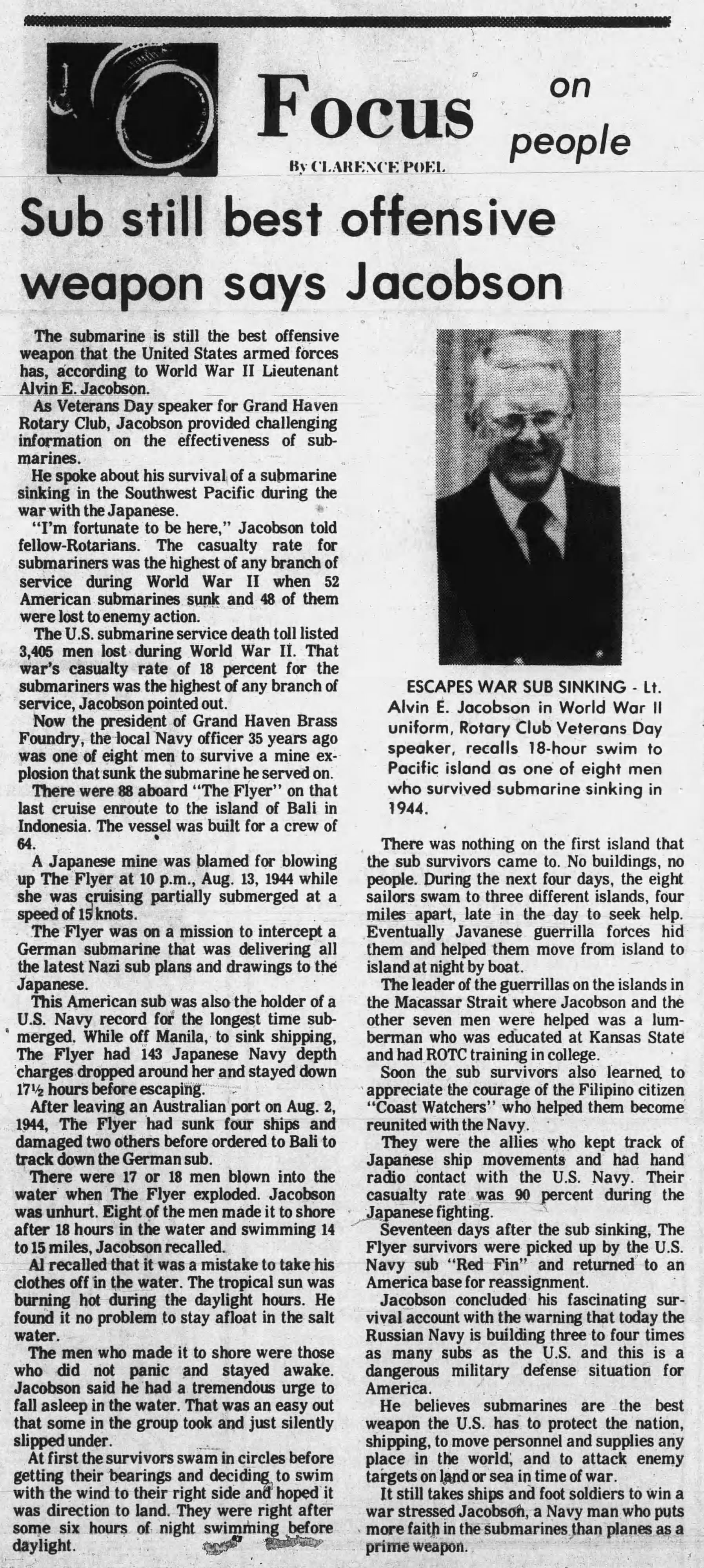
When Alvin Jacobson addressed the Grand Haven Rotary Club for Veterans Day on November 16, 1979, his neighbors knew him as the president of Grand Haven Brass Foundry, a businessman whose working life was bound closely to the community. Thirty-five years earlier, he had been a young submarine officer swimming through the night in Japanese-controlled waters. His boat had gone down beneath him, and most of his shipmates were gone. “I’m fortunate to be here,” he told the Rotarians. For Jacobson, those words described both his presence at the meeting and the extraordinary circumstances that had allowed him to live long enough to attend it.
Alvin Emmanuel Jacobson Jr. was born in Grand Haven, Michigan, on May 30, 1922, the Memorial Day of an era when the observance still fell on its traditional calendar date. His parents, Alvin and Edna Jacobson, raised six children in a family with strong Swedish roots. His father had helped establish Grand Haven Brass Foundry in 1919, giving the younger Jacobson an early connection to the industry that would occupy much of his adult life. An Eagle Scout and captain of his high school’s varsity football and basketball teams, he graduated in 1940 and entered the University of Michigan’s engineering program. He also joined Naval Reserve Officer Training, beginning the path that would take him far from Lake Michigan.
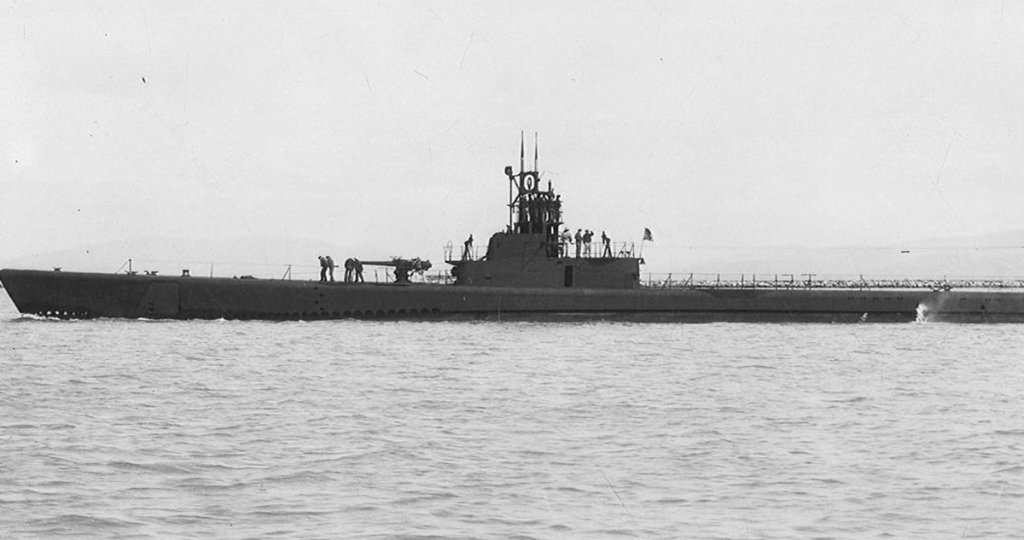
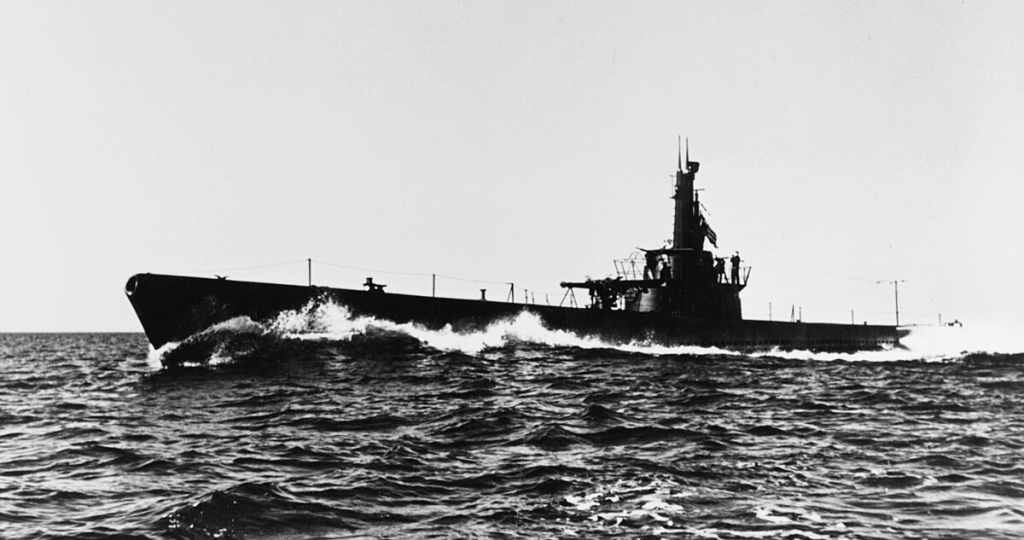
Commissioned an ensign in 1943, Jacobson graduated from submarine school at New London in April 1944 and reported to USS Flier (SS-250). The Gato-class boat was at Mare Island undergoing repairs after a grounding at Midway earlier that year. For a new officer, joining a submarine meant learning a complicated vessel while earning the confidence of men whose lives depended upon one another’s competence. Jacobson was entering a small service conducting an exceptionally dangerous campaign, attacking the shipping that carried Japanese troops, fuel, and supplies across the Pacific.
Flier left Pearl Harbor in May for the waters west of Luzon. Her first completed patrol gave Jacobson a concentrated education in submarine warfare: convoy approaches, torpedo attacks, and the necessity of surviving the escorts afterward. In his later Rotary account, he recalled 143 depth charges and a period of seventeen and a half hours submerged. Whatever confidence a young officer brought aboard, sustained pursuit by enemy escorts made the consequences of a mistake unmistakable. Flier completed the patrol at Fremantle, Western Australia, on July 5, and prepared to return to sea.
Her second war patrol began on August 2, 1944. The assigned operating area lay off French Indochina, requiring a long passage north through the island channels between Australia and the South China Sea. Balabac Strait, between southern Palawan and the islands north of Borneo, offered access from the Sulu Sea to the South China Sea. For a submarine traveling from Fremantle, reaching the patrol area involved a succession of confined passages before the business of hunting shipping could properly begin. Flier had survived one combat patrol, but experience offered no exemption from the hazards along the route.
On the night of August 13, Flier was running on the surface through Balabac Strait, south of Palawan, at about fifteen knots. Jacobson was topside. At approximately ten o’clock, a violent explosion struck the boat, generally attributed to a mine. The submarine sank so rapidly that the men below had almost no opportunity to escape. Within less than a minute, the machinery, weapons, charts, food, and fresh water that had sustained an entire crew were disappearing into the sea. Jacobson, unhurt in the initial catastrophe, found himself in the water with a scattered handful of shipmates.
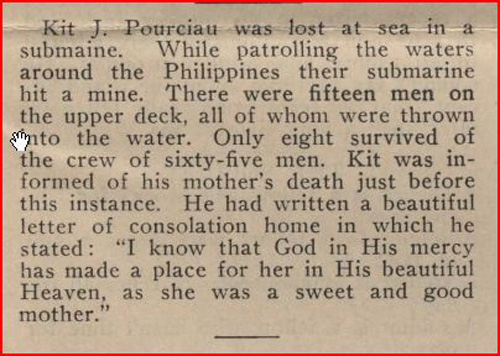
Among those lost was Kit Joseph Pourciau. Shortly before the sinking, he had learned that his mother had died. He had written home to console his family, expressing his belief that God had made a place for her in heaven because she had been “a sweet and good mother.” Soon afterward, the family had another death to mourn. Each man lost with Flier belonged to a family whose history would thereafter include the absence he left behind.
The men in the water faced an immediate problem that swimming ability alone could not solve. They needed to decide where to go. Darkness deprived them of dependable landmarks, and swimming without a bearing could consume their remaining strength without bringing them nearer land. Jacobson remembered that they initially swam in circles before using the wind against their right sides as a rough guide. The decision provided a direction they could attempt to hold together. Their survival now depended upon a succession of such limited judgments, made without the instruments and information that had been available aboard their submarine.
As the hours passed, exhaustion reduced the group. Jacobson later described a powerful desire to fall asleep in the water, an urge that seemed to offer relief from the effort of remaining alive. He remembered men slipping beneath the surface. Injuries sustained in the explosion made the ordeal even harder for some of his shipmates, and the men who remained could do little to overcome the sea’s demands upon an exhausted body. Jacobson believed that staying awake and resisting panic had been essential to those who ultimately reached shore. For men already wounded or overcome by exhaustion, the distance to shore proved insurmountable.
Daylight introduced another danger. Jacobson had removed clothing in the water and later regretted the decision when the tropical sun beat down upon his exposed skin. Salt water helped support him, but there was no shade and no fresh water to drink. In his 1979 recollection, the swim covered fourteen to fifteen miles and lasted eighteen hours. Exact measurements were difficult to establish under such circumstances. The enduring fact was the length of the struggle: through the night and well into the following day, the survivors had to continue swimming when nearly every physical impulse urged them to stop.
Eight men eventually reached land. Along with Jacobson were Flier’s commanding officer, John D. Crowley; executive officer James W. Liddell Jr.; Arthur Gibson Howell; Earl R. Bumgart; James Dello Russo; Wesley Bruce Miller; and Donald Paul Tremaine. The shore ended the immediate danger of drowning, but it offered no assurance that they would return to American control. They were behind Japanese lines, without their boat, and dependent upon whatever food, water, materials, and assistance they could find. Their first task was to recover enough strength to undertake the next stage of an escape whose end they could not yet see.
Over the following days they moved among the islands, searching for water and people who might help them. Swimming remained part of the ordeal, supplemented by improvised means of travel and eventually by local boats. A water cistern on Bugsuk Island became an important point along their route, supplying something that the ocean surrounding them could never provide. To sailors accustomed to a submarine’s carefully managed stores, the distinction was immediate and practical. Reaching land had saved them from the sea; finding drinkable water would help keep them alive there.
Filipino civilians and guerrillas made the next part of the escape possible. They sheltered the Americans and helped move them through a region under Japanese occupation, taking risks that extended to their own households and communities. Jacobson’s later account remembered boat movements at night and a resistance leader with an American college education and ROTC experience. The larger importance of the network lay in its ability to connect isolated survivors with people who knew the islands, understood local dangers, and could communicate beyond them. Without that assistance, eight American submariners might have remained stranded within sight of waters their own Navy could reach.
At Brooke’s Point on Palawan, contact with a U.S. Army coastwatcher unit provided the necessary radio link. Word of Flier’s loss could finally reach Allied headquarters, and arrangements could begin for an evacuation. The rescue depended upon cooperation across the boundary between land and sea: local knowledge and clandestine communications ashore, a submarine able to approach offshore, and a rendezvous that brought them together. For Jacobson and his companions, the waiting continued after communication had been established. Knowing that help could be requested was a considerable improvement over isolation, but it was still necessary to reach the rescuing boat.
USS Redfin (SS-272) supplied that final connection. Another Gato-class submarine operating from Fremantle, she combined attacks on Japanese shipping with the special duties that brought American submarines into contact with resistance forces and stranded Allied personnel. During the night of August 30–31, the Flier survivors were taken aboard off Palawan. Seventeen days had passed since their submarine sank. They had survived the explosion, the long swim, and movement through occupied territory. Now a second American submarine carried them away from the islands where local people had helped keep them alive.
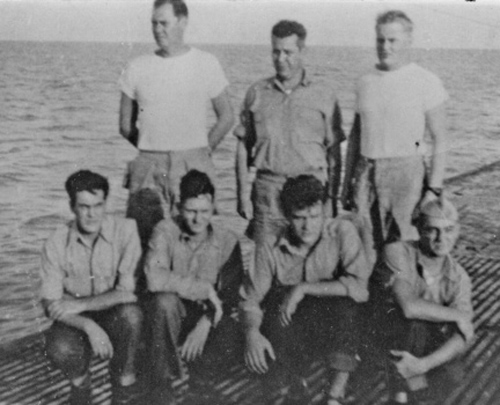
Jacobson received the Purple Heart, but his submarine service continued. On November 30, 1944, he reported aboard USS Ling (SS-297) at the Boston Navy Yard. He qualified in submarines in 1945 and was aboard Ling, bound once again toward the Pacific, when the war ended. He had returned to the same service in which he had nearly lost his life, taking up the responsibilities of a submarine officer aboard a new boat. He remained in the Navy until his discharge in 1946 as a lieutenant junior grade.
Back at the University of Michigan, Jacobson completed his mechanical engineering degree in 1947. He worked at Crane Company’s research foundry in Chicago before returning to Grand Haven in 1948 to join his father in the family business. In 1955 he married Mary Eileen Chace; they raised three children, Christine, Nelson, and Steven. He spent four decades at Grand Haven Brass Foundry, including thirteen years as president, and became a founding director of JSJ Corporation in 1972. The initials represented the Jacobson, Sherwood, and Johnson families, linking an expanding enterprise to the people who had built it.
His work extended beyond the foundry. Jacobson helped establish the Tri-Cities YMCA and Mulligan Hollow Ski Bowl and served as a founding director of the Great Lakes Naval Memorial and Museum. He supported educational and civic projects and donated his collection of ship models to the Tri-Cities Historical Museum. These were tangible contributions to a community in which he intended to remain involved. The young ensign who had once depended upon strangers in the Philippines became a businessman whose responsibilities included employees, family, and neighbors. His wartime experience remained part of his life without becoming its only subject.
At the Rotary meeting in 1979, Jacobson used that experience to argue that submarines remained essential to American defense. He spoke about their offensive power and versatility and expressed concern about Soviet submarine construction. His confidence in the submarine force had survived the loss of his own boat. Yet the account he gave his neighbors also ensured that Flier’s men remained present in the community’s memory. Listeners who knew him through business and civic affairs encountered the twenty-two-year-old officer who had once faced the possibility that he would never see Grand Haven again.
In May 1998, Jacobson returned to the Philippines with his son Steve and retraced the survivors’ route. On Bugsuk Island, father and son rediscovered the cistern that had supplied water more than half a century earlier. The return joined his wartime life to the family life that survival had made possible. Jacobson died at home in Grand Haven on October 16, 2008, at eighty-six. He left behind the memories that had helped preserve Flier’s story, a family, and a substantial record of work in his hometown. His statement to the Rotarians remained an appropriate measure of that long life. He had been fortunate to be there, and he had spent the years that followed his rescue making his presence count.


Leave a Reply